 TOOL HUNTER

Table of Contents
- Introduction
- What Is Salmon PDRN? Understanding the Ingredient
- How Is PDRN Extracted from Salmon?
- What Does Salmon PDRN Do for Skin? The Science of Regeneration
- PDRN Salmon Before and After: What Realistic Results Look Like
- How to Incorporate PDRN into Your Skincare Routine
- Who Should Use PDRN Skincare?
- Frequently Asked Questions About Salmon PDRN
Introduction
If you’ve been following K-beauty innovations or the regenerative skincare movement, four letters keep surfacing: PDRN. Short for polydeoxyribonucleotide, this bioactive molecule is changing how we think about skin repair. At its core, what is salmon PDRN? Simply put, PDRN is a highly purified DNA fragment extracted from salmon milt (sperm) that acts as a cellular signal and raw material for skin regeneration. Thanks to remarkable DNA similarity between salmon and humans, our cells readily accept these nucleotides as building blocks and repair triggers—making PDRN one of the most compelling ingredients to come out of biotechnology.
For deeper background on the ingredient itself, Pier Augé’s what is salmon PDRN guide offers a scientist-formulated perspective. In this article, we’ll go further, unpacking the extraction process, explaining exactly what salmon PDRN does for skin, sharing realistic before-and-after expectations, and showing how to incorporate this powerhouse into your routine.
Key Takeaways
- PDRN is DNA derived from salmon that closely mirrors human DNA, used to accelerate healing and rejuvenation.
- It works via adenosine A2A receptors and nucleotide salvage pathways—both clinically proven to reduce inflammation and stimulate collagen.
- Real results appear gradually, with visible improvements in texture, firmness, and hydration after 4–8 weeks of consistent use.
- Topical serums, masks, and at-home ampoules now deliver institute-grade PDRN, democratizing what was once an in-clinic only treatment.
What Is Salmon PDRN? Understanding the Ingredient
Defining Polydeoxyribonucleotide
PDRN stands for polydeoxyribonucleotide—long chains of DNA nucleotides derived predominantly from the milt of salmon species such as Oncorhynchus mykiss (rainbow trout) and Oncorhynchus keta (chum salmon). Through high-temperature extraction and careful purification, the material reaches over 95% DNA content, with proteins and peptides effectively inactivated to minimize any immunogenic risk. This process has been reviewed in recent dermatological literature, confirming that properly manufactured PDRN shares a striking structural similarity to human DNA, allowing skin cells to recognize and use the fragmented nucleotides.
Because the rungs of the DNA ladder are made of the same four bases regardless of species, salmon DNA fits naturally into human cell repair processes. Rather than acting as a foreign substance, PDRN functions as a biomimetic signal—essentially providing “instructions” and raw material to fibroblasts, the cells that produce collagen and elastin. This is why what is salmon PDRN is no longer just a clinical curiosity; it has become a foundation of regenerative skincare.
A Brief History of PDRN in Medicine and Skincare
Long before K-beauty brands bottled PDRN, it was used in wound healing and vascular medicine. A landmark 2014 clinical trial showed that intramuscular PDRN injections helped chronic diabetic foot ulcers heal significantly faster (37.3% complete healing in the PDRN group vs. 18.9% in placebo after eight weeks). European and Asian dermatologists soon recognized its tissue-remodeling potential and began injecting highly purified polynucleotides for skin rejuvenation.
The crossover into topical products emerged from Korea, where dermatology clinics had already normalized the idea of “skin booster” injections. Recognizing that PDRN activated receptors in the skin’s upper layers as well as deep in the dermis, brands developed serums, ampoules, and creams that delivered PDRN through daily, consistent use. That innovation brought institute-grade regenerative technology into bathroom cabinets—and 2026 is seeing its widest adoption yet.
How Is PDRN Extracted from Salmon?
The Sourcing Process
The question of how is PDRN extracted from salmon begins with the raw material: milt, an upcycled byproduct of the salmon fishing and aquaculture industries. As research has noted, “sperm are the most appropriate cells to provide highly purified DNA without risk of impurity,” thanks to the relatively low levels of other cellular components like proteins and peptides. This means salmon milt naturally delivers a clean starting point for DNA isolation. Brands sourcing from wild-caught salmon further reduce the potential for contaminants, making it an inherently sustainable ingredient that repurposes material that would otherwise become waste.

Purification and Fragmentation
Once collected, the milt undergoes high-temperature extraction to disrupt cell membranes and release the DNA. The raw extract then moves through multiple purification steps—including enzymatic digestion, chromatography, and sterile filtration—to remove virtually all residual proteins, fats, and other biological material. The goal is to produce fragments of DNA with a specific molecular weight (typically between 50 and 1,500 kDa) that are both bioactive and safe for cosmetic or injectable use. As a recent review published in the Keimyung Medical Journal notes, this process yields a PDRN product of >95% purity that activates A2A adenosine receptors without triggering immune reactions. The final powder or liquid can then be formulated into skin-renewing dressings, injectables, or topical skincare.
What Does Salmon PDRN Do for Skin? The Science of Regeneration
Activation of A2A Adenosine Receptors
If you’re wondering what does salmon pdrn do for skin, the answer lies in a tiny switch on your skin cells called the adenosine A2A receptor. When PDRN nucleotides bind to these receptors, they initiate a powerful anti-inflammatory and pro-repair cascade: downregulation of inflammatory cytokines like TNF-α, IL-1β, and IL-6, plus upregulation of vascular endothelial growth factor (VEGF) for improved microcirculation. This dual action—simultaneously calming inflammation and stimulating blood flow—helps explain PDRN’s effectiveness not only in anti-aging but also in post-procedure recovery. A 2026 review on post-aesthetic recovery highlighted that this A2A receptor activation accelerates re-epithelialization, reduces redness, and improves overall healing outcomes.
Collagen and Elastin Stimulation
PDRN doesn’t just tell cells to repair; it gives them the actual nucleotide building blocks to do so. Through the “salvage pathway,” fibroblasts absorb these DNA fragments and use them to synthesize fresh collagen and elastin. Clinical measurements back this up: a 2022 trial using ultrasound imaging found dermal collagen density increased by 18% and epidermal thickness rose by 14% after 12 weeks of PDRN treatment. For anyone over 25—when collagen production starts its natural decline—this means firmer, plumper skin without irritation.
Anti-Inflammatory Properties
Unlike many collagen-boosting actives that may irritate sensitive skin, PDRN actively reduces inflammation. Research in *Advances in Wound Care* (2020) confirmed that PDRN engagement of A2A receptors consistently suppresses pro-inflammatory cytokine production across multiple models. This makes PDRN a welcome ally for conditions like rosacea, post-acne redness, or skin that overreacts to environmental stressors. Rather than fighting with your complexion, PDRN calms it while rebuilding.
Hydration and Skin Barrier Support
Regenerated skin holds moisture better. By stimulating proteoglycan synthesis—the water-binding structures in the dermal matrix—PDRN improves intrinsic hydration. In controlled studies, topical PDRN reduced transepidermal water loss (TEWL) by 23% and increased skin hydration by 31% over eight weeks. That translates to the “glass skin” luminosity many desire—a dewy, bouncy complexion that reflects light evenly.
PDRN Salmon Before and After: What Realistic Results Look Like
Timeline of Visible Improvements
True pdrn salmon before and after stories are not about overnight miracles. They follow a biological timeline:
- Weeks 1–2: Initial calming of redness and irritation. Skin feels more comfortable and hydrated.
- Weeks 4–6: Texture becomes noticeably smoother; fine lines around the eyes and mouth start to soften. Radiance begins to emerge.
- Weeks 8–12: Measurable differences in firmness and elasticity. Collagen remodeling is visible on ultrasound, and surface lines are reduced by around 22% in clinical trials.
- Months 3–6: Continued collagen maturation and skin density improvements, especially with ongoing use.
Real Results by Skin Concern
- Fine lines and wrinkles: Moderate improvement, particularly in the periorbital (eye) area, supported by VISIA imaging in several studies.
- Skin dullness: Luminosity increase of up to 52% has been reported after just 15 minutes of application in some product testing (Pier Augé), with cumulative month-long brightening.
- Post-acne marks: Faster healing and reduced post-inflammatory hyperpigmentation thanks to both regenerative and anti-inflammatory pathways.
- Post-procedure recovery: PDRN significantly shortens downtime after lasers and peels, reducing redness and promoting re-epithelialization.
What PDRN Cannot Do
Honesty matters. PDRN is not a volumizing filler—it won’t replace lost fat pads or dramatically lift sagging jowls. Results are gradual and cumulative, not instant. And while the science is solid, individual responses vary based on age, baseline skin health, and product concentration. Consistency over 8–12 weeks is key to seeing meaningful change.
How to Incorporate PDRN into Your Skincare Routine
Topical PDRN Products
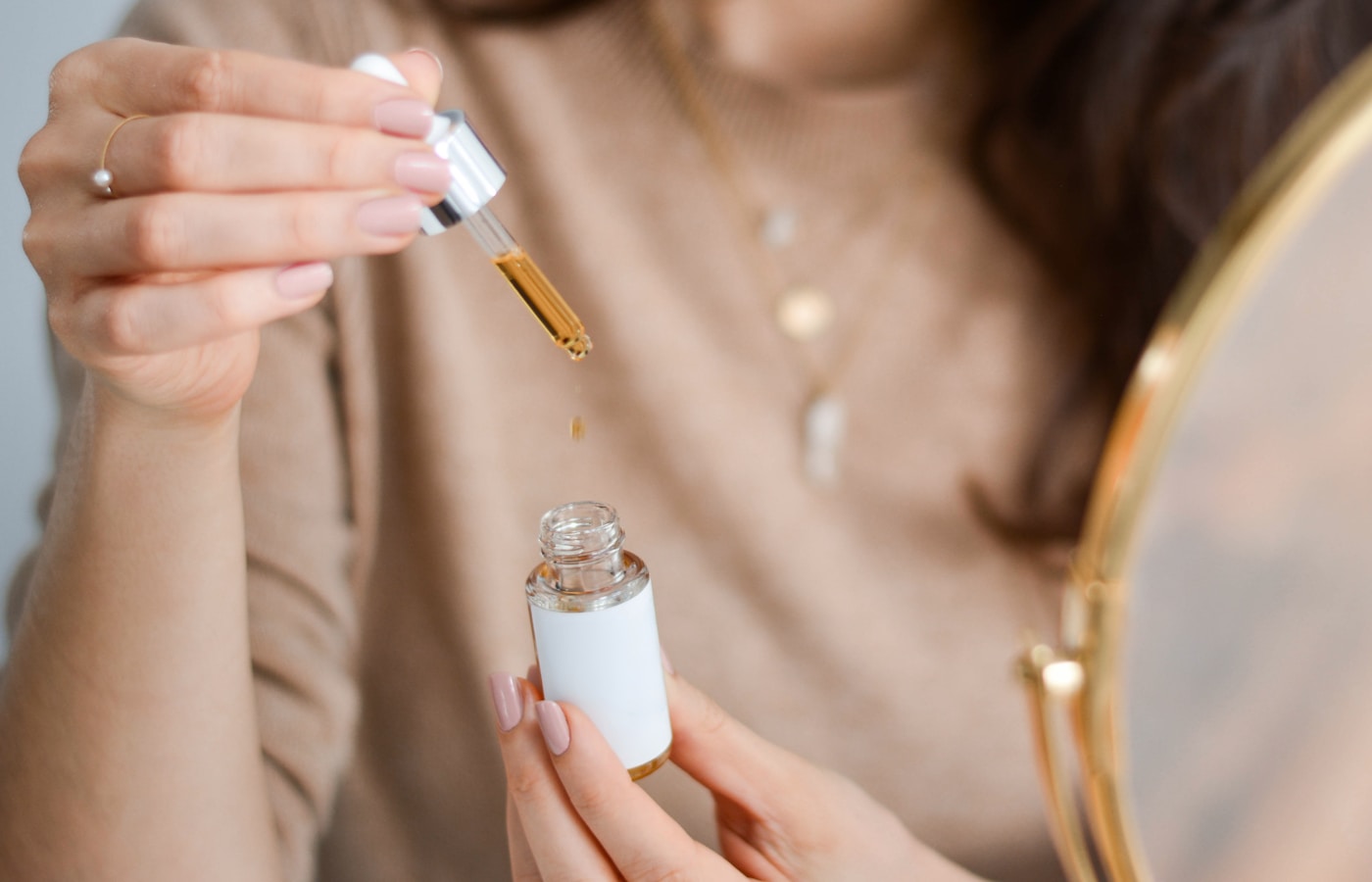
PDRN serums, ampoules, and masks have become the simplest entry point. For overnight regeneration, a concentrated pdrn mask delivers a continuous dose of DNA repair while you sleep. Pier Augé’s Douce Aura Overnight Mask, for example, blends high-purity PDRN (98% similarity to human DNA) with shea butter and bisabolol, melting from a creamy texture into a weightless veil. In clinical tests on 33 women, this mask boosted radiance by 52.69% instantly and reduced wrinkles by 20.69% over 14 days. Apply a pea-sized amount as your final step twice a week or nightly for intensive repair.
For daily anti-aging, a PDRN-rich moisturizer like the Firming Tri-Active Cream (featuring institute-grade PDRN plus peptides such as Acetyl Hexapeptide-8) reinforces the skin’s scaffolding with every use. Used together with a PDRN toner or serum, these products create a layered regenerative regimen that respects the skin’s biological code.
Professional PDRN Treatments
Injectable PDRN (often marketed as Rejuran Healer or similar) is delivered via fine intradermal injections in a series of 3–4 sessions. Microneedling with PDRN serum enhances penetration, combining the collagen-induction of needling with the regenerative signal of the nucleotides. These treatments are ideal for those who want accelerated results or targeted care for under-eye hollows and deep lines. Whichever route you choose, consistency and sun protection remain non-negotiable.
Who Should Use PDRN Skincare?
PDRN is exceptionally well-tolerated and suited for:
- Adults 25 and older seeing early signs of collagen loss.
- Anyone dealing with dullness, dehydration, or a weakened skin barrier.
- Post-procedure patients needing faster, calmer recovery.
- Sensitive skin types that cannot withstand strong acids or retinoids.
Because PDRN works biomimetically—mimicking the skin’s natural repair language—it rarely triggers irritation. Even those with rosacea or post-inflammatory marks often report soothing benefits well before anti-aging changes appear.
Frequently Asked Questions About Salmon PDRN
What is salmon PDRN made from?
Salmon PDRN is extracted and purified from the milt (sperm) of salmonids, primarily Oncorhynchus mykiss and Oncorhynchus keta. Through high-temperature processing and filtration, over 95% pure DNA fragments are isolated, removing virtually all proteins to ensure safety and biocompatibility.
Is salmon PDRN safe for sensitive skin?
Yes. Its high purification and structural similarity to human DNA make allergic reactions extremely rare. PDRN’s anti-inflammatory properties actually calm redness and irritation, so it is frequently recommended for reactive, rosacea-prone, or post-procedure skin. Still, if you have a known fish allergy, a patch test is advised.
How long does it take to see results from PDRN?
Many people notice improved hydration and soothing within the first 1–2 weeks. Visible reduction of fine lines and enhanced luminosity typically appear after 4–8 weeks of consistent use, with collagen remodeling continuing for months.
Can I use PDRN with other active ingredients like retinol or vitamin C?
Absolutely. PDRN is gentle and plays well with others. Use it in your morning routine alongside vitamin C for antioxidant protection, or layer it at night with retinoids—PDRN may even help buffer potential irritation from stronger actives.
Is PDRN the same as salmon sperm?
Not exactly. While the original source is salmon sperm, the extraction and purification process removes all cellular material except the DNA itself. The final ingredient, polydeoxyribonucleotide, bears no resemblance to the raw tissue—it is a highly refined, sterile therapeutic compound.
How often should I use a PDRN mask?
For repair and deep hydration, using a PDRN mask 2–3 times a week is ideal. If your skin is going through a particularly stressed phase, an overnight mask like Pier Augé’s Douce Aura can be applied nightly for a week as an intensive treatment, then tapered to a maintenance frequency.